ESG Economics
ESG Economics: It Is Capital Structure, Not Cost
Reframes ESG from a discretionary expense into a question of capital structure, risk premiums and cash-flow resilience.
Seven ESG themes, with Product Stewardship and EPR positioned as a focused circular-economy execution track.
Translate sustainability activity into capital, risk and cash-flow decisions.
Reframes ESG from a discretionary expense into a question of capital structure, risk premiums and cash-flow resilience.
Designs and compares a Korean green-leverage model for linking environmental performance to financing decisions.
Explains how green financial leverage can be defined, measured and governed without overstating causality.
Compares sustainability-linked finance and extended producer responsibility as two mechanisms that turn measurement into price.
Read buildings, land and biodiversity as measurable assets and exposures.
Connects green-building attributes with operating cost, asset risk, valuation logic and decision evidence.

Organizes building ESG around three practical pillars that owners can assign, measure and review.

Treats nature as an economic asset while retaining clear boundaries around valuation uncertainty.

Builds a biodiversity data layer that links sites, species, pressures, controls and reporting evidence.
Shows how an ESG or nature index can progress from indicator design to reviewable assurance evidence.
Explain rating divergence through scope, measurement and weighting choices.
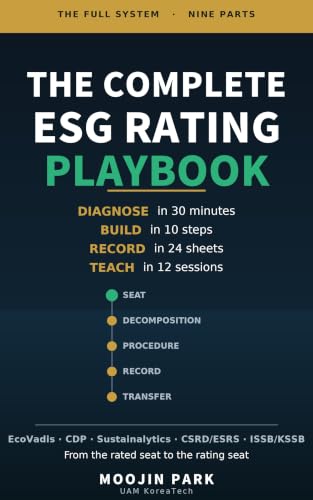
Combines a 30-minute diagnosis, ten-step indicator build, twenty-four record sheets and twelve teaching sessions into one ESG-rating operating system.

Dissects why ESG ratings diverge across scope, measurement, normalization and weighting choices.
Provides a ten-step process for constructing a transparent, reproducible ESG indicator.

Turns indicator design into working templates for definitions, data, weights, scoring and review.

Translates ESG-rating methodology into a teachable sequence with exercises and assessment logic.
Sets measurement, disclosure and the capital that reads them as one chain, and diagnoses where the chain breaks.
Turn recurring ESRS, EcoVadis and CDP requests into reusable evidence controls.
Focuses a first ESRS reporting cycle on ownership, controls, evidence trails and repeatability.
Combines EcoVadis and CDP preparation into a reusable evidence and submission operating kit.
Offers a time-boxed triage method for diagnosing an ESG rating response before deeper remediation.
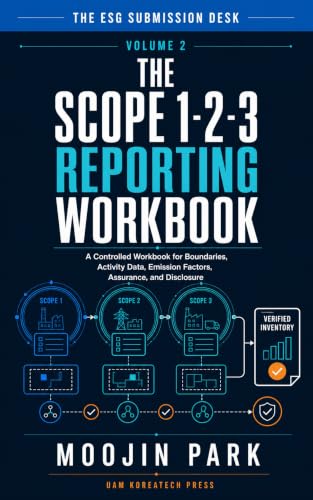
Structures Scope 1, 2 and 3 reporting around boundaries, source records, calculations and approvals.
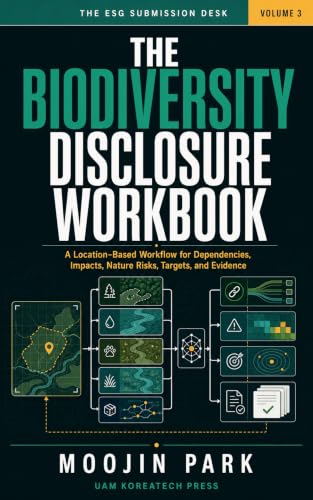
Provides a workbook for turning biodiversity impacts, dependencies and controls into disclosure-ready records.
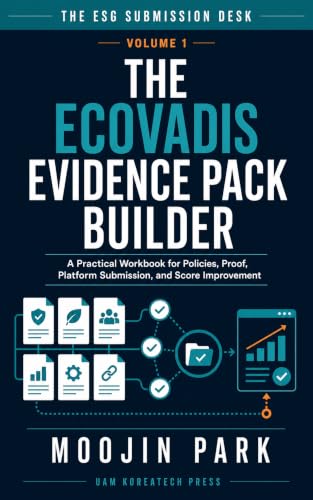
Builds an EcoVadis evidence pack around attributable policies, actions, results and review dates.
Applies a rapid evidence-triage method to recurring customer and supplier security questionnaires.
Walks a KSSB filing from standard text to submission draft across twelve steps, carried through to completion.
Turns the same twelve steps into worksheets a filing team completes with its own values, reviewers and dates.

Designs an ESG disclosure back office as twelve stages with three gates for authority, data ownership and approval.
Separates drafting, assurance and advisory in Korea’s ESG disclosure market and locates the role still unfilled.

Maps ESG disclosure obligations by jurisdiction onto a single timeline to 2033 and shows where the years overlap.
Design recovery routes, custody, unit economics and evidence as one operating system.

Treats producer responsibility, reverse logistics, custody, condition assessment and recovered value as one return-chain problem.
Defines the scope, custody, evidence and scale gates required before a voluntary take-back programme operates.
Examines how insurance, liability allocation and incident evidence affect take-back programme viability.
Links recovered material, chain of custody, economic value and circular claims in a single ledger.

Analyzes information asymmetry in EPR and identifies the operating records needed to reduce it.
Tests the evidence required before a component recovered from a used injection device can enter a new function.
Shows how product identification and observation can create useful evidence without modifying the product.
Uses year-tagged down-product operations to separate stock age, recovery timing and commercial claims.

Examines 591 units in the Korean bedding market as a bounded case for recovery and circular operations.

Explains why recovered plastic enters a different use than the one it left, and why that use must be designed first.
Place controlled review gates between AI-assisted drafting and publishable ESG output.
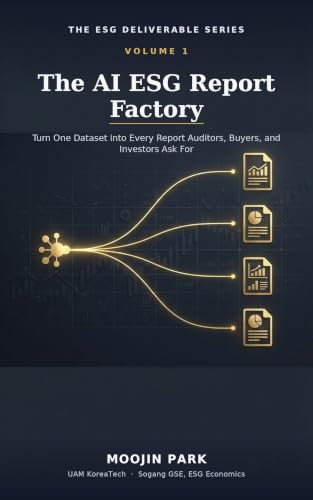
Designs an AI-assisted ESG report factory with evidence, review and release controls between draft and publication.

Treats prompt intelligence as a governed ESG decision architecture rather than a collection of isolated prompts.
Add sector-specific safety, supply-chain and orbital factors to a comparable ESG core.
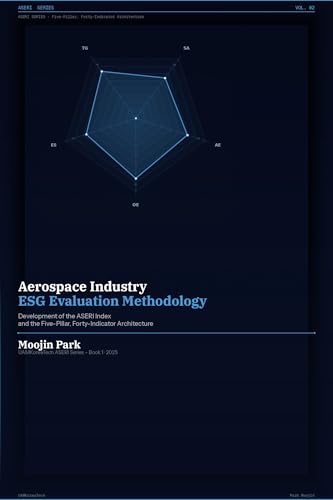
Develops an aerospace-specific ESG methodology around safety, long supply chains and sector materiality.

Defines the ASERI method, including indicator structure, weighting, evidence and transparent limitations.
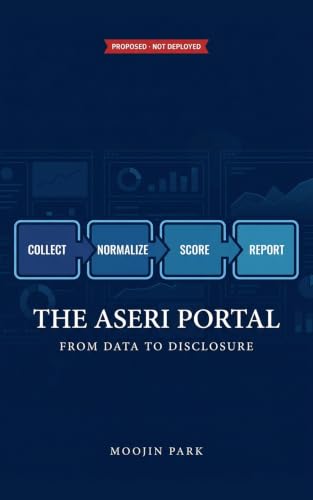
Translates the ASERI method into a portal workflow for data entry, scoring, review and reporting.

Provides a build-oriented plan for implementing an aerospace ESG evaluation portal with controlled evidence.

Applies commons-governance logic to orbital congestion, debris, access and long-term space sustainability.
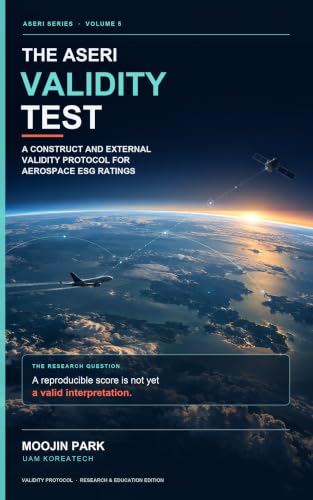
Applies construct and external validity tests to an aerospace ESG rating and states what to revise when either fails.
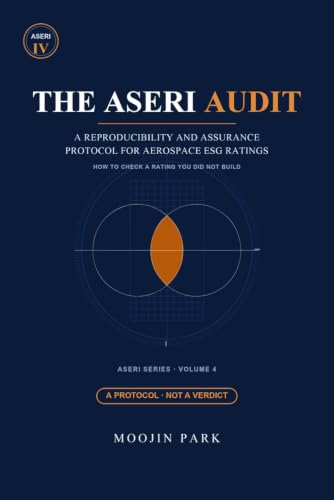
Records the data, weights and judgement rules a third party needs to reproduce an aerospace ESG rating.